

Limp Bizkit — Three Dollar Bill, Y'All$
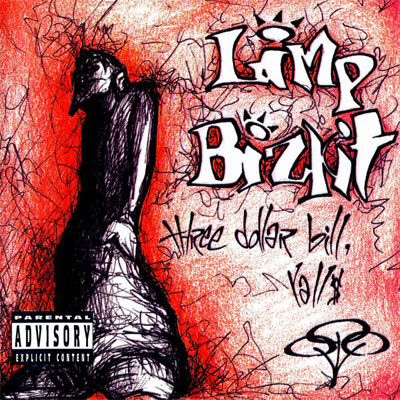
The debut record from one of modern music's most infamous bands, Three Dollar Bill, Y'All$ was what launched Limp Bizkit into the industry spotlight. Recorded with preeminent nu metal producer Ross Robinson, no one could have predicted just how big of an impact this band would have in a few short years...
While their contemporaries in Korn and Deftones had established a lot of the core elements of the nu metal genre, namely the downtuned guitars and heavy emphasis on rhythm and groove rather than overt technicality, Limp Bizkit took these fundamentals and combined them with rudimentary hip-hop influences and youthful anger as opposed to angst. This particular blend would go on to be copied and exploited to nauseating levels in the years that followed and was a big reason "rap rock" and "nu metal" were used interchangeably. It's such a played out concept — and has been for a long time — but even in the late 90s, the notion of a white guy rapping was still a novelty to some extent.
All of the Limp Bizkit hallmarks are present on Three Dollar Bill, Y'All$, but in a much more primitive form, complete with a messy Ross Robinson production job. Fred Durst's vocals are pretty evenly split between his standard high-pitched, yelpy raps and above average metal screams; aside from some overdubs here and there, the vocals are quite raw and unpolished.
The rhythm section of Sam Rivers and John Otto really holds the record together. Despite the reputation nu metal earned for basic song compositions, Rivers and Otto lay down an assortment of slick, skillful bass and drum lines on this record — which tended to be overlooked due to the band's obnoxious image and smothering media profile.
Meanwhile, Wes Borland's guitar work — which has never been deeply technical whatsoever — is so crude and rudimentary that it almost defies description. A mix of elementary power chords and clever noise effects, Borland's style would never have worked with any other band. The riffs on Three Dollar Bill, Y'All$ are serviceable but lacking the infectious nature and punchiness of the band's peak output. The guitar tones are aenemic and the playing is just barely in time. It's a style that works, but just barely; it's not like Borland ever became a shredder, but he vastly improved his sound and general musicianship over time. Sam Rivers' bass playing is the glue holding a lot of this material together.
On the whole, Three Dollar Bill, Y'All$ feels very uneven. While the Limp Bizkit sound never strayed all that much from this record, the band did improve as song writers and performers. The biggest difference between this album and those that followed is the massive increase in production values. On Three Dollar Bill, Y'All$, they sound like a young, hungry band that hadn't quite hit their stride yet. All of the fundamental ingredients were present, they just hadn't gelled together; Limp Bizkit would go on to refine the blend of stupid, groove-heavy noise they established on this album and hone it to a razor-sharp point on subsequent releases.
Three Dollar Bill, Y'All$ starts to drag near the end of the second half of the record, and some of the tracks — like "Stalemate" and the interminable "Everything" — could have been a lot shorter. Of the band's whole catalog, very little of this record comprises their big hits. The "Faith" cover crutches entirely on its novelty factor — remember: this was before aggro versions of pop songs were played out as a concept — while "Pollution" and "Counterfeit" are emblematic of the whole record: mostly competent, full of energy and rage but lacking real memorability or even a hint of nuance.
"Stuck" is a strange mix of aggro noise, an odd non-sequiter shout-out to Suicidal Tendencies coupled with an egregiously misogynistic narrative. Anger directed at women is a consistent theme on the album, and something the band was reportedly told to tone down on future releases. At the time, I didn't think much of the lyrical content at all, but going back to this as a 42-year-old was quite jarring.
If you're just looking to see what the big deal was with Limp Bizkit, this isn't essential listening. Three Dollar Bill, Y'All$ is an interesting retrospective but musically lacking. The heights that such an obnoxious band of goofballs ascended to are mind-boggling even to this day. In its time, the seething anger of this album resonated a lot more with me, whereas now it's a mixture of quaint and mildly embarrassing. The band has an inexhaustible supply of rage but lacks even a hint of introspection on this record. The whole narrative is intensely sociopathic — lashing out at haters, biters and ex-girlfriends — but only in the most nebulous terms. That being said, those qualities — and the vagueness of their definition — almost certainly made the music broadly appealing as anyone could slot themselves into the role of aggrieved narrator. (I know I did.)
Of all the band's albums, this is one of the least memorable to me. Like a lot of fans, I came upon it after the band broke through with "Nookie," and Significant Other, so this record has always felt more like a band's rough demo than a debut — like a step back to a different time, even a mere 2 years after it dropped. It has a rustic charm I still appreciate, and there are songs and riffs that still get my blood pumping, but this was very obviously a group that had yet to reach their full potential.
Summary
For those familiar with the late 90s and early 2000s, the name Limp Bizkit triggers a strong reaction; it was impossible to be indifferent to or unaware of this band's activities. Speaking as an unabashed fan of Limp Bizkit for 27 years, I will say that this album aged the worst out of the whole collection, even if I do still enjoy some parts of it. (Note: Results May Vary was always bad, this one lost lustre over time.) As a historical artifact, this record is a great example of how nu metal was still — even in mid-1997 — in the process of evolving into the mainstream phenomenon it became. In 3 short years, Korn and Limp Bizkit would sell 10s of millions of albums and dominate the charts and music media.
Album Information
Release date: July 1st, 1997
Record label: Flip / Interscope Records
Fred Durst — vocals
Wes Borland — guitar, backing vocals
Sam Rivers — bass
John Otto — drums
DJ Lethal — turntables, samples, keyboards, programming
Ross Robinson — production
Track Listing
- Intro
- Pollution
- Counterfeit
- Stuck
- Nobody Loves Me
- Sour
- Stalemate
- Clunk
- Faith (George Michael cover)
- Stink Finger
- Indigo Flow
- Leech (Demo)
- Everything
—by Derek
Published: September 11th, 2025.