

Korn — Korn
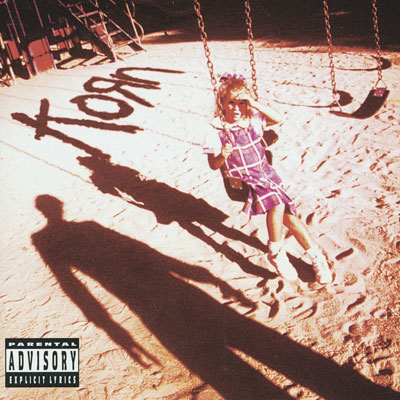
For such an influential record, it took a lot longer than I expected to sum up my thoughts on Korn's self-titled debut. It was not the album that introduced me to the band, and didn't even own a physical copy of it until some point in mid-2000s and possibly even much later than that.
When Korn dropped in late 1994, I was just getting into Nirvana — not even the band's more subversive material, either — and my developing brain was still fixated on the radio hits. Over the course of the next few years, I slowly developed a taste for a broader range of music and began my journey into the world of metal. It wasn't until the band's third album, Follow the Leader, that the their popularity truly exploded, and I was introduced to them through a long-time childhood friend.
Korn was never one of my favourite bands, but they were absolutely a gateway into a world of increasingly heavier music. Whether one was a fan or not, it was apparent to anyone upon their first listen that Korn were doing something very different. Sonically, the band's trademarked low-tuned, groove-centric sound was unlike anything I had ever heard. Lyrically and vocally, Jonathan Davis was able to channel anxiety, rage and depression in a way that was both hyper-specific but also extremely relatable to the average teenager.
When I dug into the band's discography, and worked my way backwards, I found I enjoyed the self-titled debut — and its follow-up, Life is Peachy — significantly more than Follow the Leader. A lot of people will criticize the production quality of the first two albums, citing Ross Robinson's severe lack of experience as a recording engineer at the time, but I'm going to disagree with that assessment.
Yes, Robinson was very green, but his decision to record the album 'live' yielded a very unique sound, further accenting the band's at-the-time groundbreaking use of downtuned 7-string guitars and Fieldy's distinct bass tone. It's not all upside, as the drums do suffer tonally, and have a demo quality to them despite a big presence in the mix. The album also confines itself to a fairly limited register, which can make things begin to sound a bit repetitive with extensive listening, but these are minor nitpicks in the big picture view.
Now, you can't discuss a Korn record without mentioning the bass. One of the issues with downtuning, especially back in the early 90s, was the risk of drowning out the rest of the rhythm section by eating up their frequency range. Fieldy's ingenious solution to this problem was to simply tune down so low that notes lose meaning, and then use the instrument for percussion.
It's difficult to imagine today — given the prevalence of 9-string guitars and 6-string basses — but the sound of Fieldy's strings clanking against the frets of his bass used to inspire some of the angriest forum posts from bitter, old metalheads. Whether he's 'good' or not, the albums that put Korn on the map would be vastly different without Fieldy's distinct style and tone; the bass is as important anything else in this mix. I don't think I even gave bass much consideration before Fieldy made the instrument's potential so clear.
The record kicks off with "Blind" and immediately tells you what the band is all about: chunky riffs, mid-tempo grooves, weird guitar effects, thundering bass and Jonathan Davis alternating between melancholy and menace — and deploying a technique I can only describe as a form of scatting. Each track flows seamlessly into the next, further painting a picture of trauma, unease and victimization to a backdrop of headbanging riffs.
The material deals with social ostracism on tracks like "Clown," "Ball Tongue" and "Faget" (pronounced how you think), addiction on "Helmet in the Bush," as well as deeper, more unsettling childhood abuse on the gut-wrenching closer, "Daddy." It became a bit of a cliché over time, but the record ending with a sobbing Jonathan Davis' howls of misery left a vivid impression on me that has not dulled with the passage of time.
I always found the dismissal of nu metal, in its day, as 'jock rock' missed the obvious reality that Korn — one of the flagship and enduring bands of the genre — were a bunch of ugly dorks who made music about being bullied, abused and depressed. David Silveria was the only normal-looking guy in the band, and they hid him behind a drum kit. But I digress...
During my many re-listens for this review, I kept coming back to the fact that this album dropped 6 months after Kurt Cobain died and sounds like there should be 6 years separating them. While often imitated, the Korn formula was never duplicated to any great success.
Thirty years later, this record still holds up. It's not a flawless album in a technical sense, but it was a stark departure from the mainstream of its day. It was such a successful break with conventional approaches that Korn kickstarted an entire genre in addition to the producing career of Ross Robinson, and influenced countless musicians over the decades. The closest comparison at the time would be Faith No More, and only in the sense that both bands have extremely unique vocalists and tremendous basslines.
Ultimately, this is what every band strives for on a debut release: establish a recognizable sound and deliver a bunch of bangers. For overall song quality, pacing and vibe, this is a nearly perfect album that I still enjoy listening to in 2024.
Summary
I would argue this is one of the most important albums of the 20th century. Korn hit the scene with a novel sound and a batch of quality songs that would vault them to superstardom and help to ignite the nu metal boom of the late 90s and early aughts. The influence of this record cannot be overstated and the material itself stands the test of time, still packing a punch and containing some of the band's most celebrated tracks like "Blind" and "Shoots and Ladders."
Album Information
Release date: October 11th, 1994
Record label: Immortal Records / Epic Records
Jonathan Davis — vocals, bagpipes
Brian "Head" Welch — guitar, backing vocals
James "Munky" Shaffer — guitar
Reginald "Fieldy" Arvizu — bass
David Silveria — drums
Ross Robinson — production, engineering, mixing
Track Listing
- Blind
- Ball Tongue
- Need To
- Clown
- Divine
- Faget
- Shoots and Ladders
- Predictable
- Fake
- Lies
- Helmet in the Bush
- Daddy
Link: spotify.com
—by Derek
Published: March 30th, 2024.